Just as a storm throws down a weak tree, so does Mara overpower the man who lives for the pursuit of pleasures, who is uncontrolled in his senses, immoderate in eating, indolent, and dissipated.
Trans. Acharya Buddharakkhita
He who lives looking for pleasures only, his senses uncontrolled, immoderate in his food, idle, and weak, Mara (the tempter) will certainly overthrow him, as the wind throws down a weak tree.
Trans. Max Muller
Those who dwell on the attractiveness of sensual enjoyments,and live with the senses unguarded, and are immoderate in eat-ing, they are slothful and weak in perseverance and will-power.Emotions overpower such persons as easily as the wind over-powers a weak tree.
Trans. Ven. Weragoda Sarada Thero
How easily the wind overturns a frail tree. Seek happiness in the senses, indulge in food and sleep, and you too will be uprooted
Trans. Thomas Byrom
This is the first time Mara appears in the Dhammapada but not the last. Mara tempts, deceives, destablises, encourages doubt and generally causes spiritual chaos. He’s a trickster, a hinderance, personification of our faults or often death itself. To Western eyes he appears like the Christian devil and perhaps to Western eyes we might prefer him to evaporate altogether and pretend he’s not in the text at all.
I’ve quoted 4 translations of the verse. Two of them name Mara and two of them don’t. In absolute fairness, Ven. Weragoda Sarada Thero mentions Mara over and over in the commentary that comes with the translation and Thomas Bryon is almost writing a poetic version of the Dhammapada so perhaps niggles about accuracy aren’t especially relevant. It does illustrate a point though; it’s a example of the supernatural side of Buddhism being downplayed. This may or may not be an issue depending on where you are coming from, but it’s a issue for me.
I don’t like to pretend that Buddhism is a secular endeavour and it’s somewhere between philosophy and self help. I think it does Buddhism a disservice and frankly let’s people off the hook. People might prefer that there’s no spooky, supernatural, difficult to rationalise stuff in Buddhism. We might prefer to think of Karma and Rebirth as some form of extended metaphor. We might prefer to keep Bodhisattvas as pictures on a thangka. We might prefer to think as Mara as purely our own psychological wrinkles and faults. I don’t think we can.
I personally would find the entire thing easier we could ignore all this stuff – I probably would prefer it wasn’t there at all. But it is there. It’s in the texts and it’s referred to over and over. You could ignore it. But then you could ignore nirvana, enlightment and the Buddha himself. You could pick and choose, but is the Dharma really pick and mix or is it a strict set menu where the chef won’t change it for you at all, no matter how many times you ask her.
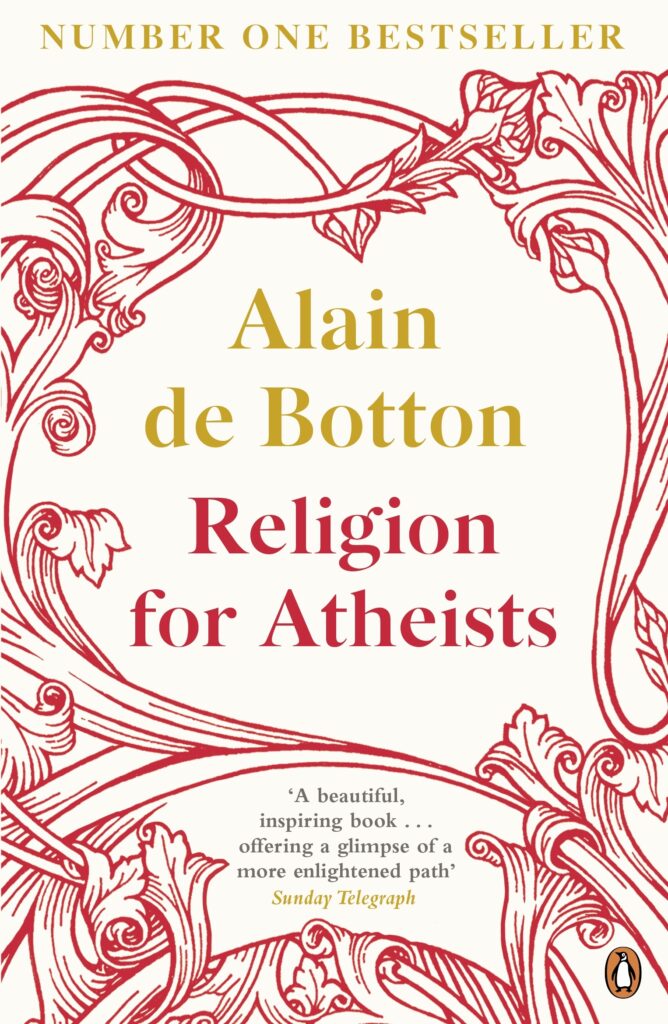
A few years ago, the popular philosopher Alain de Botton wrote Religion for Atheists. He advocated taking the best bits of religion (community, ethics etc…) and stripping out the difficult stuff (God, miracles, anything supernatural). This would be a religion for atheists. It was a compelling argument and a very good book. Around the same time a organisation started up called the Sunday Assembly to put this idea into practice. Even though I was a practicing Buddhist at the time, I went along.
It didn’t work. It felt flat and forced and I couldn’t see why people were there other than they wanted some company on a Sunday morning; some extra friends maybe. It was upstairs in a pub and it felt like we might as well have been downstairs, indulging in early doors drinking with the rest of the customers. I’m sure they were lovely people but stripping out the supernatural to make religion fit in with our current exclusively scientific world view seems misguided at best. We strip out the supernatural and we remove the magical, dispose of the inspiration and sideline the transcendental. I prefer my religion to be religious.